The Family Jewels
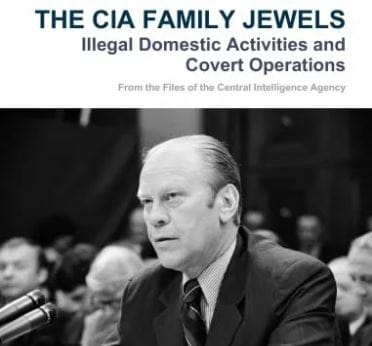
The "Family Jewels": 5 Shifting Revelations from the CIA’s Secret Internal Files
On May 16, 1973, Howard J. Osborn, the CIA’s Director of Security, delivered a memorandum that would peel back the curtain on decades of institutional overreach. Written in the shadow of the "Watergate climate," this internal audit was a frantic response to a direct order: identify any past activities that could cause "massive public embarrassment" or legal jeopardy. These files, later dubbed the "Family Jewels," were never meant for public consumption. They were a catalog of "flap potential"—a ledger of the Agency’s most dangerous secrets, compiled at a time when the legal restrictions of the National Security Act of 1947 were beginning to feel like a noose.
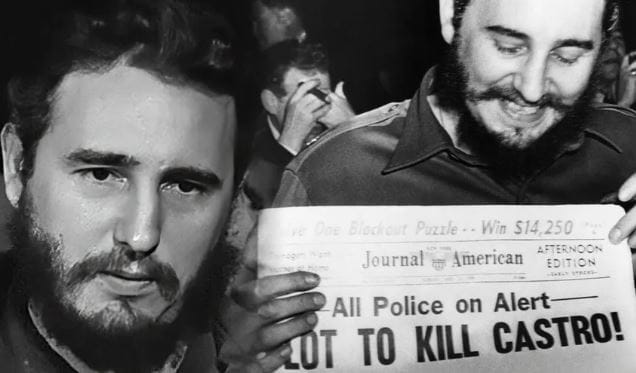
1. When the CIA Recruited the Mob to Take Out Castro
Perhaps the most infamous entry in these files is the Agency’s decision to partner with the very men sitting atop the Attorney General's "Most Wanted" list. In 1960, the CIA used Robert Maheu to recruit Johnny Roselli, a high-ranking member of the "syndicate" who controlled the ice-making machines on the Las Vegas Strip. Roselli, in turn, introduced the Agency to "Sam Gold" and "Joe"—later identified by Parade magazine as Chicago chieftain Sam Giancana and Cuban operations boss Santo Trafficante. The files reveal that this was a partnership of "calculated risks" that extended beyond assassination.
During the height of the negotiations, Giancana requested that the CIA bug the hotel room of comedian Dan Rowan, whom he suspected of an intimacy with his girlfriend, Phyllis McGuire. The CIA-linked technician was caught in the act and arrested by local police. To protect the Castro plot, the Director of Security had to personally brief Attorney General Robert Kennedy to ensure the criminal charges were dropped. While the CIA’s Technical Services Division produced six "potent pills" of high lethal content to poison Castro’s food, and the Agency set aside a $150,000 bounty for the dictator's death, the project was scrapped after the Bay of Pigs. Crucially, the internal files note that despite their efforts, neither Roselli nor Giancana ever received a payout from Agency funds.
"In August 1960, Mr. Richard M. Bissell approached Colonel Sheffield Edwards to determine if the Office of Security had assets that may assist in a sensitive mission requiring gangster-type action. The mission target was Fidel Castro."
2. Project Mockingbird and the War on the Press
Project Mockingbird (March 12 – June 15, 1963) represents one of the Agency’s most aggressive domestic incursions. To plug leaks of classified information, the CIA installed wiretaps on the homes and offices of two Washington-based newsmen. This was not a rogue operation; it was a high-level collusion involving DCI John McCone, Attorney General Robert Kennedy, Secretary of Defense Robert McNamara, and the Director of the DIA, General Joseph Carroll.
To execute the taps, the CIA bypassed legal hurdles by securing the assistance of a telephone company official who responded to a personal request from the Director of Security. The resulting dragnet was staggering. The intercepts identified that the newsmen were in contact with 12 U.S. Senators, 6 Members of Congress, and 16 government employees—including a White House staff member. The Agency eventually observed that these journalists were receiving more classified data than they could even use, often passing "leaks" to other reporters to be published under different by-lines. This pattern of turning intelligence inward to monitor the press would later continue under Project CELOTEX, which targeted journalists like Michael Getler and Jack Anderson.
3. The Three-Year Incarceration of Yuriy Nosenko
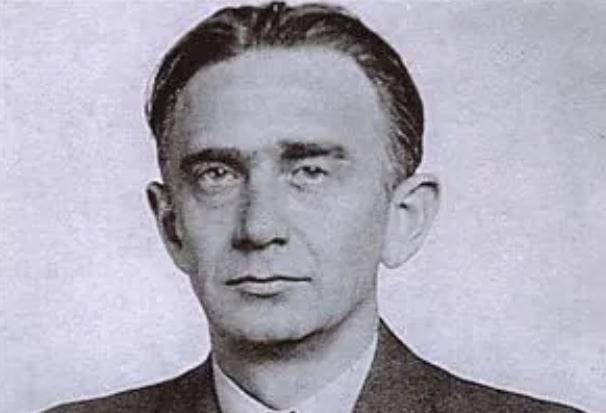
The case of KGB defector Yuriy Nosenko remains a haunting study in Agency paranoia. After defecting in 1964, Nosenko was branded a "dispatched agent" sent to deceive the U.S. From April 1964 to August 1965, he was held at a safehouse in Clinton, Maryland. However, as the Agency’s suspicions hardened, he was moved on August 13, 1965, to a "specially constructed 'jail'" located in a remote wooded area.For over two years—until October 27, 1967—Nosenko was "literally confined in a cell behind bars with nothing but a cot in it."
He was subjected to hostile interrogation and solitary confinement intended to break his resolve. The outcome of this ordeal was as surprising as its brutality: after his responsibility was transferred to the Office of Security and he was interviewed under "friendly" conditions by Bruce Solie, Nosenko was found to be bona fide. He eventually became a "valuable and economical" asset, aiding in multiple prosecutions.
"While I regret my three years of incarceration, I have no bitterness and now understand how it could happen."
4. Turning Intelligence Inward: Domestic Police Support
The "Family Jewels" provide meticulous evidence of the CIA providing "Special Support" to local police departments, effectively acting as a domestic logistics hub. Despite a foreign-only mandate, the Agency funneled military-grade equipment to the Metropolitan Police Department (MPD), Fairfax County, Arlington County, Montgomery County (MD), New York City, and San Francisco. The rationale was to help local departments monitor anti-Vietnam War demonstrations and "repel invaders" in case of riots near Agency installations. The inventory of "loaned" items included:
- 200 M-9 and 196 M-17 Gas Masks
- 231 Steel Helmets and Liners
- 130 Protective and Flak Vests
- 36 "Searchlight Tear Gas" units
- 3 Stun Guns
- 6 Mustang 35 Pistols
Howard Osborn noted in his memo that while he didn't believe the support was "totally illegal," it would certainly be viewed as a violation of the National Security Act by a skeptical Congress.
5. The Secret $33,000 Postage Bill for the White House
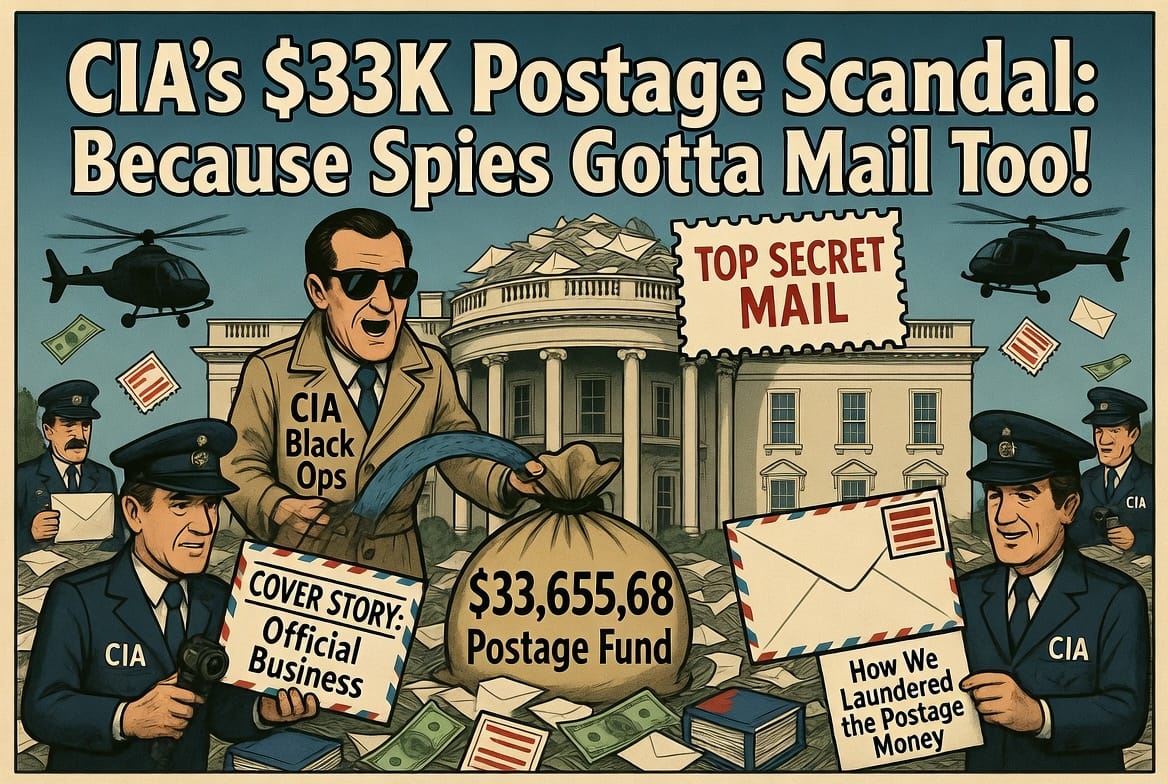
In May 1970, following President Nixon’s speech on Cambodia, the White House was buried under a mountain of correspondence. The President insisted on personally answering every "pro-Cambodia" letter, but the State Department could only provide $10,000 in support. To bridge the gap, the CIA secretly funneled $33,655.68 to the White House to cover the costs of stationery, printing, and postage. The true revelation here is the mechanism of the cover-up. In recorded phone calls between CIA’s Warren Magnusson and the White House's John Brown, the two discussed how to hide the transaction from the General Accounting Office (GAO). They agreed to use an "unclassified" 1080 billing form that avoided mentioning "printing" or "postage," instead certifying the charges as "classified services."
The priority was keeping the Agency's fingerprints off the public record.
"I think we want to know what we spend our money for but I don't think we want the public records to show that we paid for it."
Conclusion: A Legacy of "Calculated Risks"
The "Family Jewels" reveal an agency that viewed its legal charter not as a boundary, but as a hurdle to be cleared through "calculated risks." The files show a consistent willingness to bypass democratic oversight—whether by wiretapping the press, incarcerating defectors, or paying for the President’s stamps—provided the paper trail could be sufficiently obscured.
The Agency eventually faced the consequences of this philosophy when it took the "calculated risk" of letting Jack Anderson break the Roselli story rather than intervening in a deportation case. This exposure, combined with the "Watergate climate," fundamentally altered the public’s trust in the CIA. It leaves us with a forward-looking question that remains unresolved: In a democratic society, can an agency built on secret mandates ever truly be held to the standard of the law, or is "flap potential" the only real deterrent to institutional overreach?